Pine cones: small things, remarkable stories
Meet pollen cones, seed cones, and the next generation tucked beneath the scales.
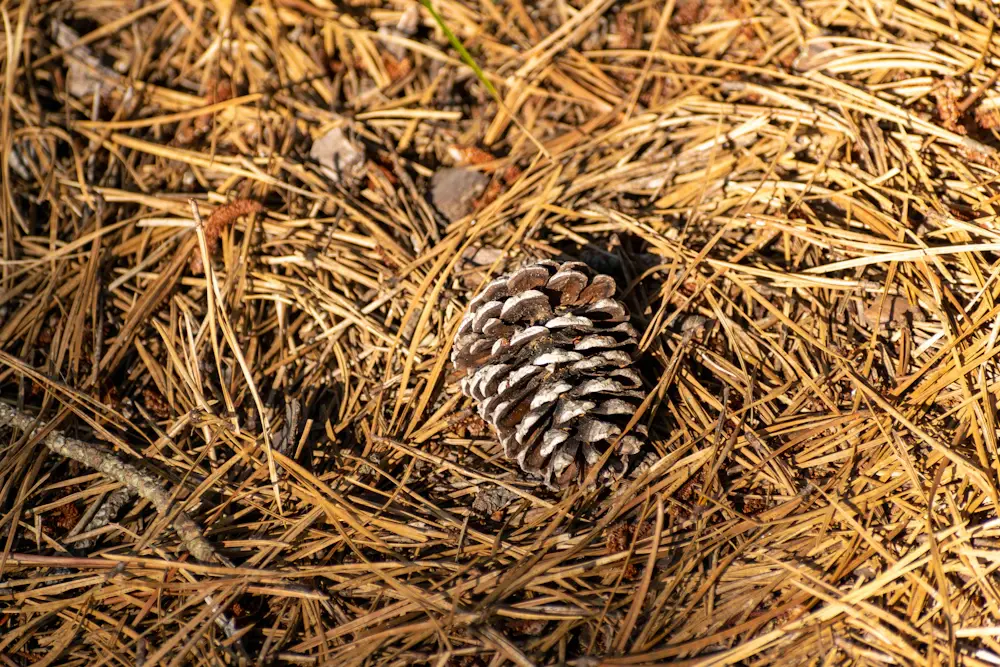
Pines produce pollen cones and seed cones. The familiar woody cone is a seed cone; it protects developing seeds. Cone shape, scale tips, and size can help identify the tree.
Two jobs, two kinds of cone
The woody cones on the forest floor are only part of the story. Pines also produce smaller pollen cones. Wind carries pollen, while seed cones support the next generation of seeds.
Do not expect every cone to be woody, brown, or ready to collect. Young seed cones can be small and colorful. A tree may carry cones at different stages at the same time.
A useful clue for identification
A cone becomes more informative when you keep it connected to a tree. A cone under a mixed stand may have fallen or rolled away from its parent. If you can, photograph the cone on the tree from ground level.
Record the length, overall shape, and scale tips. Combine those details with the number of needles in a bundle. Identifying pine trees is easier when you use several clues together.
Why some cones stay closed
Pine species differ in how they hold and release seed. Some lodgepole pine populations have cones that remain sealed until heat opens them. Other cones release seed without that trigger. That variation is one reason a single home propagation recipe cannot suit all pines.
Never use a fire or an improvised oven treatment as a shortcut to opening an unidentified cone. Purchase documented seed if you want a predictable starting point.
Find seeds, not just empty scales
A mature cone that has opened may have already shed most of its seeds. The seed itself is much smaller than the cone; in many species it has a wing that helps it travel on the wind.
If growing is your goal, read the pine seed guide before collecting. Identification, permission, and seed maturity come before sowing. Cones from a shop may be treated or unsuitable for propagation.
Leave room for the forest
Fallen cones are part of woodland habitat. Where collecting is permitted, take only what you need and leave plenty behind. In parks and protected areas, follow the site’s rules and photograph your finds instead.
A nature notebook can be a better collection than a bag: sketch a cone, add a needle count and location, and come back later to see what has changed.
Sources & further reading
- NC State Extension: the genus Pinus
- National Park Service: lodgepole pine reproduction
- Colorado State University Extension: planting a pine tree from seed
Consulted October 21, 2026. Our guides draw on horticultural and forestry references; they are not a substitute for a local diagnosis or site assessment. Read our editorial approach.