What kind of pine tree is that?
Needles, cones, and bark: learn the small details that help you put a name to a pine.
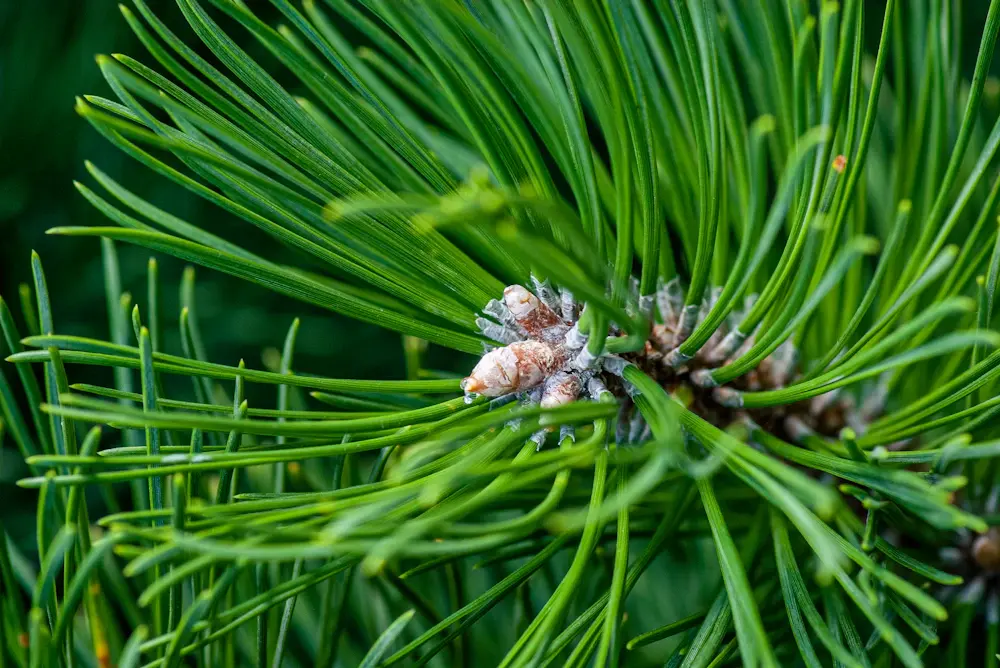
Start by checking whether needles grow in bundles. Count several bundles, then compare needle length, cones, bark, and geographic location. A single trait rarely identifies a pine with confidence.
First, make sure it is a pine
People often call any evergreen a pine, but true pines belong to the genus Pinus. Most have mature needles gathered into small bundles called fascicles, with a sheath at the base. Spruce and fir carry individual needles along the twig.
Common names can be misleading. Norfolk Island pine, Wollemi pine, and Japanese umbrella pine belong to other genera. If a nursery label includes a botanical name, use it as your starting point.
Count the needles in a bundle
Examine several intact bundles on an accessible branch. A broken or missing needle can give the wrong count. Avoid climbing or pulling material from trees in protected areas.
| What you find | Species to investigate | What to check next |
|---|---|---|
| Two needles | Red pine, Scots pine, lodgepole pine, pinyon pine | Length, twist, cones, and location |
| Three needles | Loblolly pine; many ponderosa pines | Cone prickles, needle length, and bark |
| Five needles | Eastern white pine; bristlecone pine | Soft long needles versus short crowded tufts |
This is a shortlist, not a complete key. Some species vary in needle count, and other pines share these traits. Our pine tree identifier lets you narrow the species in this field guide.
Read the cone and the bark
Photograph a mature cone beside a ruler when it is safe and permitted to do so. Note its shape and whether the scales have prickles. Young cones can look very different from mature cones.
Bark is useful, but it changes with age. Include a photograph of the whole tree and a close-up of its trunk. A young tree may not yet have the familiar bark of a mature specimen.
Put the tree back on the map
An identification that fits the needles but not the location deserves a second look. Record the region, approximate elevation, and whether the tree was planted or grows in woodland. Gardens can contain species far outside their native range.
If the clues disagree, keep the identification provisional. A local extension service, botanical garden, or regional field guide can help. This guide is not a basis for deciding whether needles, cones, or seeds are safe to eat.
Keep a useful field record
For your next walk, save five observations: location, whole-tree shape, needle bundle count, cone appearance, and bark. Those notes will help you compare trees long after the walk is over. Explore our pine species profiles to get familiar with the differences.
Good questions.
Are all evergreen trees pine trees?
No. True pines belong to Pinus. Spruces, firs, and many trees with pine in their common name belong to different genera.
Sources & further reading
Consulted October 21, 2026. Our guides draw on horticultural and forestry references; they are not a substitute for a local diagnosis or site assessment. Read our editorial approach.