Pruning pine trees without the guesswork
Know when to leave a pine alone, when to pinch new growth, and when to call an arborist.
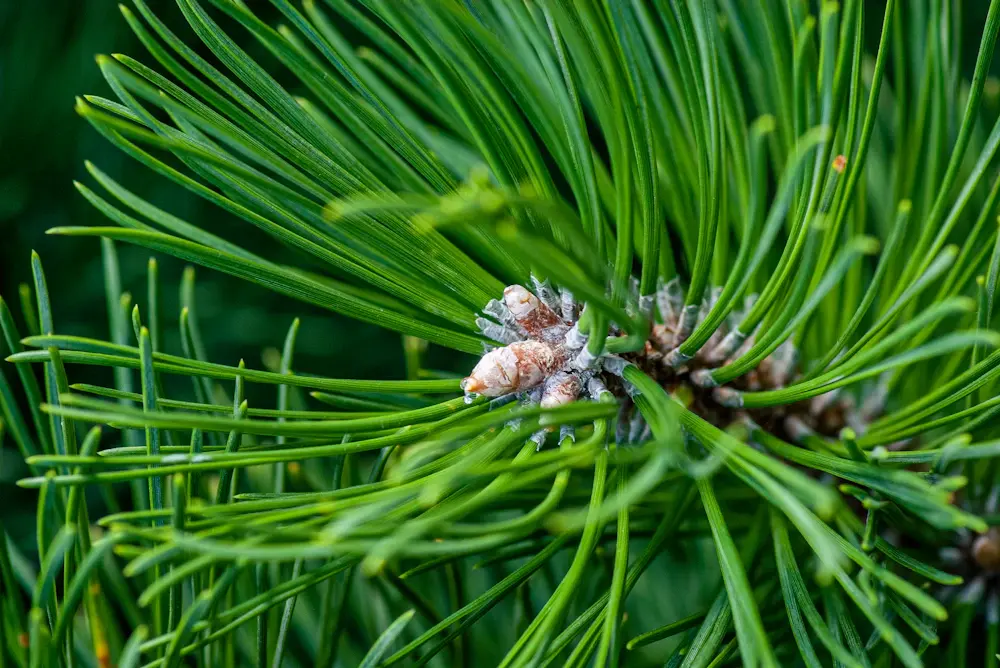
Most pines need little pruning. For modest density control, work on soft new spring candles before needles mature. Avoid cutting back into bare old wood or topping the main leader.
Decide what the cut is for
Before picking up a tool, name the problem. A broken branch, a little extra density, and a tree that is too large for its site are three different situations. Repeated hard trimming is not a sustainable fix for a large-growing pine in a small space.
If there is no clear problem, leaving the natural form alone is often the best choice. Observe a season of growth first, especially if you do not know the species.
Understand the candle stage
Pine candles are the upright, soft shoots of new growth. For many garden pines, selectively shortening part of a candle before its needles mature can encourage a denser outline. This is a light shaping technique, not a way to turn a forest tree into a permanent miniature.
Use the condition of the growth, not a universal calendar date, to judge timing. Climate and species influence when shoots elongate. If you missed the suitable stage, resist substituting deep cuts into old branches.
Avoid bare wood and topping
Many pines do not reliably produce fresh growth from old, needleless wood. Cutting a branch far behind its green growth can leave a bare stub. Removing the main leader can also create lasting structural problems.
A hedge trimmer makes it difficult to judge individual shoots and can leave cut needles with brown tips. For a few small, reachable shoots, a deliberate approach gives you more control over what remains.
Separate maintenance from hazardous work
Look at the whole branch before doing anything. Is it under tension? Is it above a building or walkway? Would removal require a ladder, climbing, or work near wires? Those are reasons to use a qualified arborist.
Photograph a damaged tree from a safe distance and explain what changed. Large limbs and storm damage need assessment of both the tree and the area below it. Do not stand beneath a hanging branch to examine it.
Keep a simple pruning record
Note the date, reason, and part of the tree worked on. Photograph the result so you can compare the next flush of growth. If the tree repeatedly needs size reduction, revisit the planting choice using our guide to choosing pine trees.
If needles are browning, investigate the cause before pruning the whole tree into shape. Read why a pine tree turns brown for the observations worth collecting.
Good questions.
Can I cut the top off a pine tree to keep it small?
Topping is not a good way to control the mature size of a pine. Choose a suitable species or cultivar, and ask an arborist about an existing oversized tree.
Sources & further reading
- University of Minnesota Extension: pruning trees and shrubs
- University of Maryland Extension: pruning shrubs and hedges
Consulted October 21, 2026. Our guides draw on horticultural and forestry references; they are not a substitute for a local diagnosis or site assessment. Read our editorial approach.